The Supreme Court on Friday rejected an appeal challenging the Karnataka High Court’s decision to permit Banu Mushtaq, the International Booker Prize-winning author, to serve as Chief Guest for the inauguration of the Mysuru Dasara festivities on September 22. The ruling effectively ended a legal challenge that questioned her participation in the state-organized event on religious grounds.
The two-judge bench, comprising Justice Vikram Nath and Justice Sandeep Mehta, examined the plea filed by petitioner H.S. Gaurav, who had earlier approached the Karnataka High Court. The counsel argued that inviting Banu Mushtaq to inaugurate the event infringed upon his client’s fundamental rights under Article 25 of the Constitution, which guarantees the freedom to practice religion.
Court questions validity of plea
During the hearing, the bench asked Gaurav to explain the basis of his petition. When the lawyer referred to India’s Preamble and mentioned the word “secular,” the judges responded, “That should not interfere with my religious activities.”
The bench firmly dismissed the appeal, stating, “This is a state program. How can the state distinguish between A, B, and C?” The judges emphasized that cultural festivities organized by the government cannot be viewed through the narrow lens of personal religious objections.
The petition had claimed that Mushtaq’s participation would hurt Hindu sentiments, alleging that she had made “anti-Hindu” remarks in the past. However, the court found no substantial grounds to prevent her from participating.
Petitioner’s arguments against Banu Mushtaq
Gaurav argued that the inauguration involves lighting a lamp before Goddess Chamundeshwari at the temple in Mysuru, which he insisted was a religious act and should not be performed by a non-Hindu. He cited judicial precedents to claim that allowing someone from another faith to take part in rituals undermined essential religious practices.
The plea also alleged that permitting Banu Mushtaq, who has been vocal on various social issues, would “defile the sanctity of the festival” and go against established Hindu traditions.
Despite these arguments, both the Karnataka High Court and the Supreme Court found no constitutional violation in her participation.
Karnataka High Court’s earlier ruling on Banu Mushtaq
On September 15, the Karnataka High Court had already dismissed a series of petitions—including Gaurav’s—challenging Mushtaq’s role. A two-judge bench led by Chief Justice Vibhu Bakhru and Justice C.M. Joshi noted that interfaith participation in cultural or religious festivals does not contravene constitutional provisions.
The High Court observed: “The festivities are organized by the State every year, and an accomplished person is invited to inaugurate the ceremony. In the past, invitees have included scientists, educationists, authors, and freedom fighters. Respondent No.4, Banu Mushtaq, is an accomplished author, a 2025 Booker Prize winner, a lawyer, and a social activist. Her credentials justify her selection.”
The High Court further clarified that Articles 25 and 26 of the Constitution do not prohibit individuals from other faiths from participating in celebrations of festivals belonging to a different religion.
Profile of Banu Mushtaq
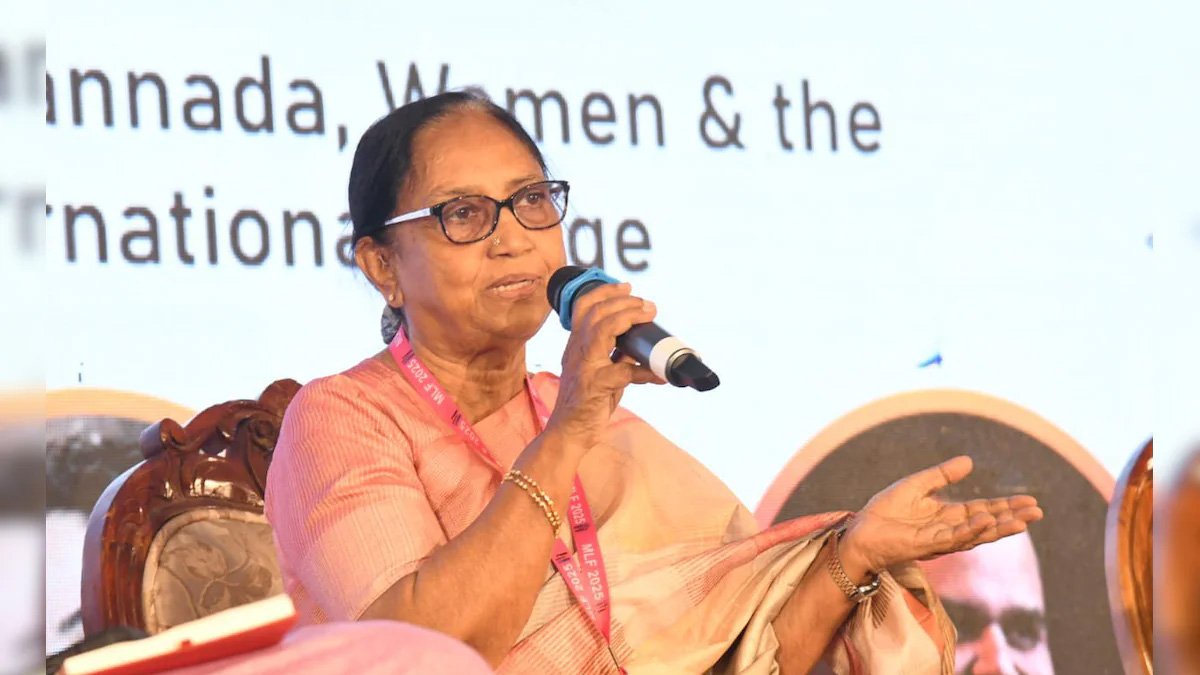
Banu Mushtaq has emerged as one of India’s most celebrated literary figures. She is the recipient of the 2025 International Booker Prize, recognized for her contribution to world literature. Beyond her writing career, Mushtaq has also served in various public positions, including as a Member of the Hassan City Municipal Council, Chairperson of the Visitor’s Board of Chamarajendra Hospital, and Member of the State Library Authority.
She has also chaired the Hassan District Samata Vedike and the Women’s Development Forum, showcasing her commitment to social issues and inclusive development. Her selection as Chief Guest reflects both her literary achievements and her contributions to public service.
Broader implications of the ruling
The controversy around Banu Mushtaq’s role highlights the ongoing debate in India over the intersection of religion, state authority, and cultural traditions. By dismissing the plea, the Supreme Court reaffirmed that the state has the right to organize cultural events without being restricted by religious considerations.
Legal experts note that the ruling reinforces the principle of secularism enshrined in the Indian Constitution, which allows individuals from different faiths to participate in cultural activities without undermining religious rights.
At the same time, the case underscores the sensitivities surrounding temple-linked festivities, where rituals are often intertwined with cultural celebrations. While the petitioner argued that state involvement diluted Hindu traditions, the courts found that inviting a respected public figure like Mushtaq did not violate constitutional guarantees.
The Supreme Court’s dismissal of the appeal against the Karnataka High Court ruling clears the path for Banu Mushtaq to inaugurate the Mysuru Dasara festival on September 22. With both courts emphasizing secular values and inclusivity, the judgment strengthens the position that cultural festivals organized by the state belong to all citizens, regardless of faith.
By upholding Karnataka’s decision, the judiciary has sent a strong message that accomplished individuals like Mushtaq can be celebrated for their contributions to society, even within the framework of traditional festivals. The decision reflects the evolving balance between religious sentiments and constitutional principles in India’s democratic setup.